How to Keep Mice Out of Your Cherry Hill Home This Winter
 By Bob Millaway

When the leaves start to pile against foundations along Route 70 and the nights turn crisp in Cherry Hill, the mice start moving. Rodent season in New Jersey begins before the calendar says winter, ramping up in October and November as outdoor food sources disappear, and by the first frost much of the township's older housing stock is playing host to house mice, deer mice, and the occasional squirrel in the attic. The good news is that most winter pest problems are preventable with a few weekends of work. This guide covers where they get in, how to seal those gaps, what actually deters them, and when to call a professional.
Do Cherry Hill homes really get mice in the winter?
Yes, and the township is a natural fit for them. Cherry Hill's classic 1950s and 1960s neighborhoods, the split-levels and ranch colonials of Barclay-Kingston, Woodcrest, Ashland, and Downs Farm, were built with crawl spaces, attached garages, and ground-level living areas that make it easy for a mouse to move in undetected. Homes close to the wooded edges, along Cooper River Park, near Croft Farm, or backing up to the creek corridors, see more pressure because field and deer mice are simply following the food and warmth from the brush line to the house line.
The pests you are most likely to meet are house mice, which breed year-round indoors and can produce dozens of offspring in a single season, along with deer mice and white-footed mice in the woodsier sections of town. Grey squirrels and flying squirrels chew their way into attics, Norway rats patrol garages and crawl spaces near water, and brown marmorated stink bugs slip through window trim and siding to overwinter in wall voids. Even if you have never seen a mouse in Cherry Hill, plan for the season as if one is looking at your house right now, because one almost certainly is.
Where do mice and squirrels actually get in?
Mice do not need much. A house mouse can squeeze through a gap about a quarter of an inch wide, roughly the width of a pencil, because its skull and ribs compress. Patrol the outside of your home at ground level and you will find the usual suspects:
- Utility penetrations. Every pipe, wire, and cable that enters the house, gas lines to the water heater, AC linesets, dryer vents, internet cables, is a tunnel waiting to be used. These are the first gaps to check in any Cherry Hill home.
- The garage-to-house wall. In attached-garage split-levels, the interior wall between garage and living space is a classic mouse highway, especially where the garage is finished loosely around pipes.
- Foundation cracks and vents. Settlement cracks in brick and block foundations, uncapped foundation vents, and gaps under basement window wells invite rodents in from the crawl space or basement.
- The roofline. Soffits, ridge vents, missing shingles, and unscreened attic gable vents give squirrels and mice the express route into your insulation.
- Doors and thresholds. A worn door sweep on the side door or a gap under the garage man-door is an open welcome mat, and pet doors are a door into the house for animals far bigger than mice.
The most honest way to find your own entry points is to walk the perimeter at dusk in late September or early October, when rodents are starting to explore, with a flashlight aimed at the base of the house. Any opening you can see with a light is an opening a mouse can find by smell alone. Pay special attention to the utility wall behind the electric meter, the spot where the gas line enters for the water heater, and both sides of the garage door, because those three places account for a surprising share of Cherry Hill rodent traffic.
What about squirrels and stink bugs?
Mice get the headlines, but the bigger winter guests in Cherry Hill come in two shapes. Grey squirrels and flying squirrels are attic specialists: they chew through soffits, push under loose ridge shingles, and nest in insulation, where they gnaw wires and leave droppings that smell through the ceiling. The fixes are different from mouse work. Trim tree branches so they end at least eight feet from the roofline, so a squirrel has to travel across open air to reach the eaves, cap the chimney, and repair loose soffits before November. Once a squirrel is inside, professional removal with a one-way door is the humane route, because blocking the entry with the animal still inside turns an attic problem into a wall problem.
Brown marmorated stink bugs are the other fall arrival, and they are mostly a nuisance: they slip through window trim, gaps around AC units, and under siding to overwinter in wall voids, then appear inside on warm January days. They do not breed indoors or damage the structure, so the cure is simple. Seal around window AC units and window frames with weatherstripping and caulk, vacuum up the ones you find, and do not crush them, because the odor is the point of the name.
Which entry points should you seal before winter?
Sealing happens in two passes: the quick weekend pass and the contractor pass. The quick pass takes an afternoon and covers most Cherry Hill homes:
- Doors. Replace worn threshold sweeps and weatherstripping so that no light shows under exterior doors or the garage man-door.
- Utility lines. Fill gaps around pipes and cables with stainless steel wool packed tight, then cover with expanding foam or exterior caulk. Rodents can gnaw through foam alone, so the steel wool is what actually stops them.
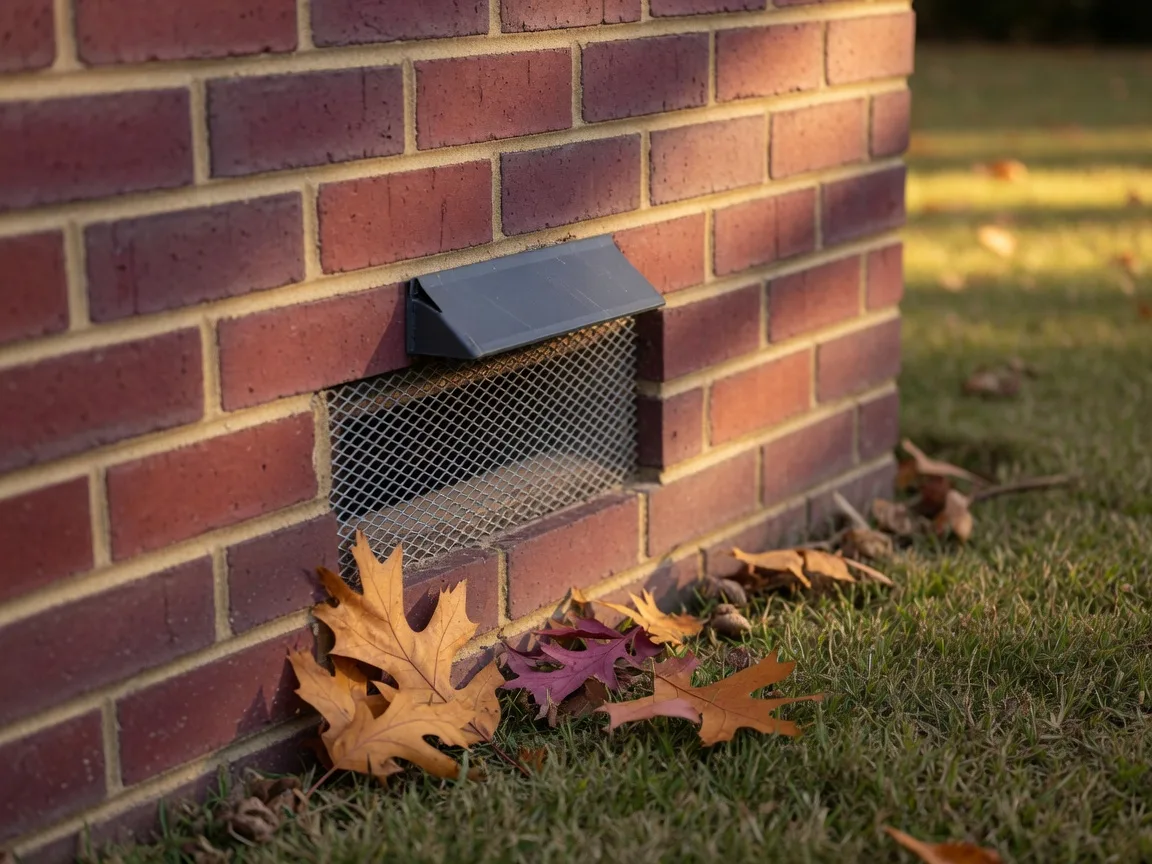
- Foundation vents and windows. Replace missing or rusted vent covers with galvanized hardware cloth, and check basement window wells for cracked frames and gaps.
- The bottom of the garage. Gaps under the big garage door let mice in, and from the garage they follow the wall into the house. A rubber garage door bottom seal fixes most of it.
- Downspouts and leaf piles. Sweep leaves away from the foundation and keep firewood, brush, and stored bins off the ground and away from the siding. A leaf mound against the house is a rodent ramp with a cover on it.
The contractor pass is for the work that needs tools and often a permit: repointing cracked mortar, repairing rotted soffits, capping a chimney, or adding an attic access door seal. When the roof line is involved, call a licensed New Jersey contractor, and the contractor guide covers how to vet one. If you find water stains or damp crawl space soil while you are down there, the seasonal home maintenance guide and the basement flood checklist in the basement flooding guide are worth a read before the wet season compounds the pest season.
What actually works to keep mice away?
Sealing is half the battle. The other half is removing what is attracting them, and that is where most Cherry Hill homes quietly fail:
- Store food like a pest is shopping for it. Transfer cereal, flour, pasta, and pet food into glass or heavy plastic containers. A mouse will chew through a cardboard box and a thin plastic bag in one night. Wipe counters and under the toaster, and never leave pet bowls out overnight.
- Take the trash out. Keep outdoor cans away from the foundation and use cans with tight lids. Kitchen compost that sits out too long is a feeding station.
- Declutter the garage, basement, and attic. Cardboard boxes are nesting material and cheap shelter. Raise stored items off the floor on shelving, and swap cardboard for plastic bins where you can.
- Say no to birdseed at ground level. A feeder hanging over a patio is a buffet for squirrels and mice. If you feed birds, use a pole feeder with a baffle and clean up spillage.
- Be skeptical of repellents. Ultrasonic plug-in devices and peppermint oil have little lasting effect, in most homes they are a temporary trick at best. Traps work; sealing works; repellents mostly make you feel productive. That is the honest version.
If you are dealing with an active mouse now, snap traps baited with peanut butter, placed along walls where you see droppings, are the fastest tool, and glue boards are an option in garages and crawl spaces away from pets. Rodenticide (poison) indoors risks a dead mouse in a wall, an odor that lasts for weeks, and danger to pets and kids, so use it only outside, in tamper-resistant stations, by a professional or under professional advice.
When should you call a professional pest control company?
Call in a pro when you see signs of an active infestation rather than just a single curious mouse: droppings in multiple rooms or in cabinets, gnaw marks on wires or wood, scratching in the walls at night, a musky odor in the basement or garage, or evidence that mice or squirrels are nesting in insulation. Professionals do the exclusion work the same way described here, but faster, with the right materials, and with their own insurance, which matters when the work is up on a ladder or inside a crawl space.
In Cherry Hill you can start local. Orkin has a Cherry Hill branch on Dobbs Lane off Route 70, A-Amendt Pest Control has served the township for years, and Western Pest Services operates out of Maple Shade a few minutes away. Ask any candidate for an inspection-based quote (not a sales pitch), proof of NJ licensing and insurance, and a plan that lists the exclusion work they will do, not just the traps they will set.
Can winter pests hurt your home's resale value?
They can, in ways that show up at the worst possible time. Mice and squirrels chew electrical wiring, which is a fire hazard that buyers' inspectors flag immediately, they soil and trample insulation in attics, which is expensive to replace, and a persistent odor in a basement or garage makes a home feel unsound no matter how fresh the paint is. If you are selling within the next year or two, treat pest-proofing as prep work: a well-sealed, rodent-free home photographs better, smells better, and gives buyers one less objection.
In a competitive market like Cherry Hill, where well-maintained homes in Barclay-Kingston, Woodcrest, and Downs Farm still draw multiple offers in desirable price ranges, the homes that sell fastest are the ones with no surprises in the crawl space. Keep your receipts from the pest contractor and the exclusion work, and alongside the Cherry Hill Real Estate Market guide, you will know exactly what to say when an inspector or an appraiser asks about the attic. The Homeowner Resources library has the rest of the fall prep, and the fall maintenance checklist pairs this pest work with furnace service and gutter cleaning on one calendar.
The best pest control is the work you do in September and October, before the first mouse ever finds your warm side of the wall. Have questions about Cherry Hill and what it takes to keep a home here through every season? Contact Bob Millaway at 856.426.1522, and Bob will point you to the right contractor, the right priorities, and the right move for your house.
Keep Exploring Cherry Hill
More guides from Bob Millaway to help you love where you live.
Written by Bob Millaway, Epique Realty AI Certified Agent™
Your Cherry Hill community expert. Have questions about Cherry Hill and getting your home ready for every season? Contact Bob Millaway at 856.426.1522 or get in touch.