How to Prevent Ice Dams on Your Cherry Hill Home: A Winter Roof and Attic Guide
 By Bob Millaway
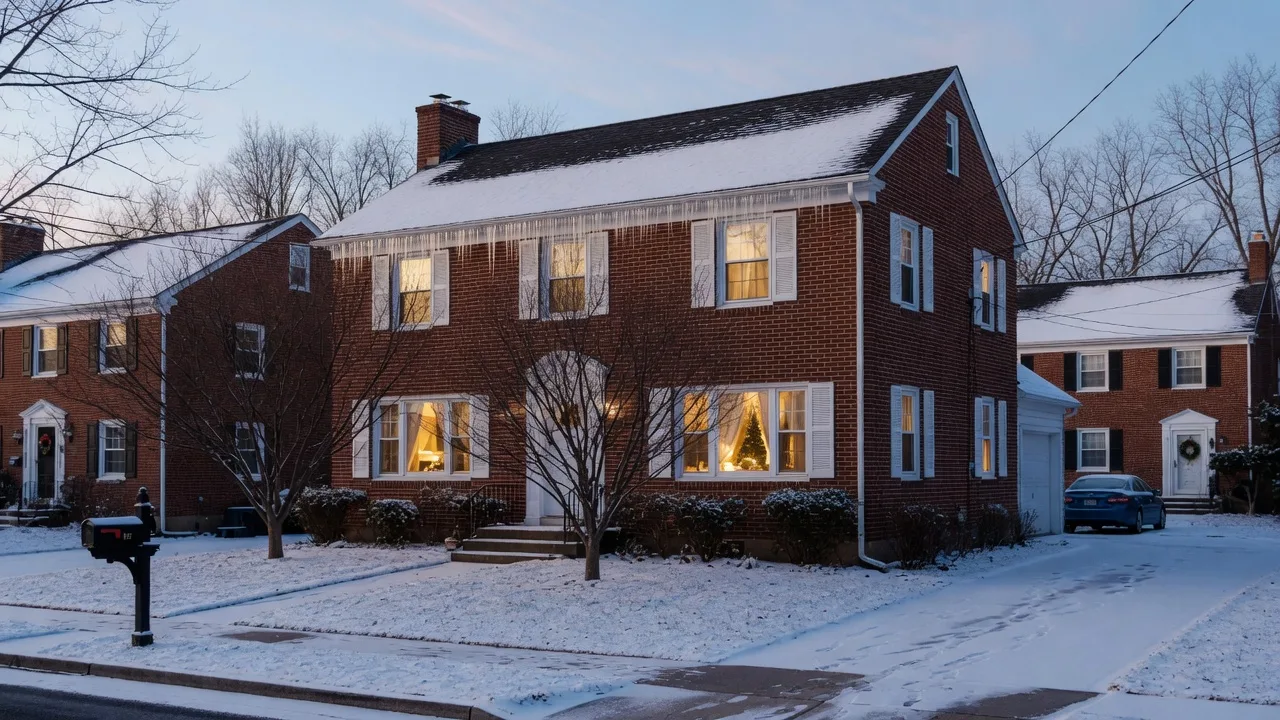
Ice dams are the winter headache that comes after a good snowfall in Cherry Hill: a ridge of ice builds up along the roofline, and instead of draining, meltwater backs up behind it and finds its way under the shingles, into the attic, and down the walls. The fix is not chipping ice off the gutters in February. It is making the roof cold in October: enough attic insulation, sealed air leaks, working ventilation, and clean gutters. This guide explains what causes ice dams, why some Cherry Hill homes get them and others do not, how to prevent them before the first snow, and what removing one costs in South Jersey.
What causes ice dams on Cherry Hill homes?
An ice dam is a physics problem, not a roofing problem. Warm air from the living space below rises into the attic, heats the underside of the roof deck, and melts the snow on top of the roof. That meltwater runs down the slope until it hits the eaves and gutters, which hang beyond the heated portion of the house and stay cold. There it refreezes into a ridge of ice. As the ridge grows, the next round of meltwater pools behind it, and the ponding water pushes up under the shingles and through the roof deck. That is when ceilings stain, insulation gets soaked, drywall warps, and, in cold stretches, water travels all the way down inside wall cavities to the first floor.
The condition shows up exactly where the attic is warm and the eaves are cold, and the usual triggers are all things a homeowner can control: recessed lights and ceiling fixtures without airtight covers, gaps around chimney chases, plumbing vents, and bathroom exhaust fans, and thin or settled attic insulation that lets heat pour through the ceiling. South Jersey's freeze-thaw pattern makes it worse. Cherry Hill averages about 12 to 15 inches of snow a year, mostly in January and February, and the daytime melting followed by overnight refreezing is precisely the cycle that grows an ice dam one layer at a time, as covered in the Cherry Hill weather guide.
Why are some Cherry Hill homes more at risk than others?
Any home with a heated attic or cathedral ceiling is a candidate, which in Cherry Hill includes a lot of the mid-century inventory. The postwar colonials, ranches, and split-levels in Kingston Estates, Barclay, Woodcrest, and Springdale were built in the 1950s and 1960s with the insulation standards of their era, and decades of settled fiberglass mean many have far less than the R-49 attic insulation the New Jersey energy code requires in new construction today. Add a low-slope roof, a complex roofline with valleys, or a finished attic with kneewalls, and you have more surface where meltwater can collect.
Older homes also leak more air by nature: pull-down attic stairs, ceiling light fixtures, recessed can lights, and the plumbing stacks that rise through the roof are all classic bypasses that pour heat into the attic. If your neighbors on both sides get icicles in the same spot year after year, that is a strong hint the house shares an air-sealing and insulation problem, not bad luck. That is exactly the conversation to have with an insulation contractor before winter, and the trusted contractors guide has vetting advice for hiring that kind of work in town.
How do you prevent ice dams before the first snow?
The permanent fix is a cold roof, and in South Jersey that means three things done together: air seal, insulate, and ventilate. Seal the attic floor first, because insulation only works when there is no warm air moving past it. Caulk and foam around every penetration, install airtight and insulated covers over recessed lights, seal the attic hatch, and make sure bathroom and kitchen fans vent all the way to the outside rather than into the attic. Then bring the insulation up to depth across the whole attic floor, aiming for the modern standard of R-49, roughly 16 to 18 inches of blown fiberglass or cellulose in this climate zone.
Ventilation finishes the job by keeping the roof deck itself cold, so the snow stays snow. Ridge and soffit vents with clear baffles let cold outside air sweep under the deck, and if yours are buried under insulation, that is part of the problem to fix while you are up there. Fall is also the time to have the gutters and downspouts cleared and the roof checked, because a clogged gutter full of leaves and a missing shingle turn a minor ice problem into a leak. The Cherry Hill gutter cleaning guide and the fall home maintenance checklist cover both, and both are best finished by mid-November.
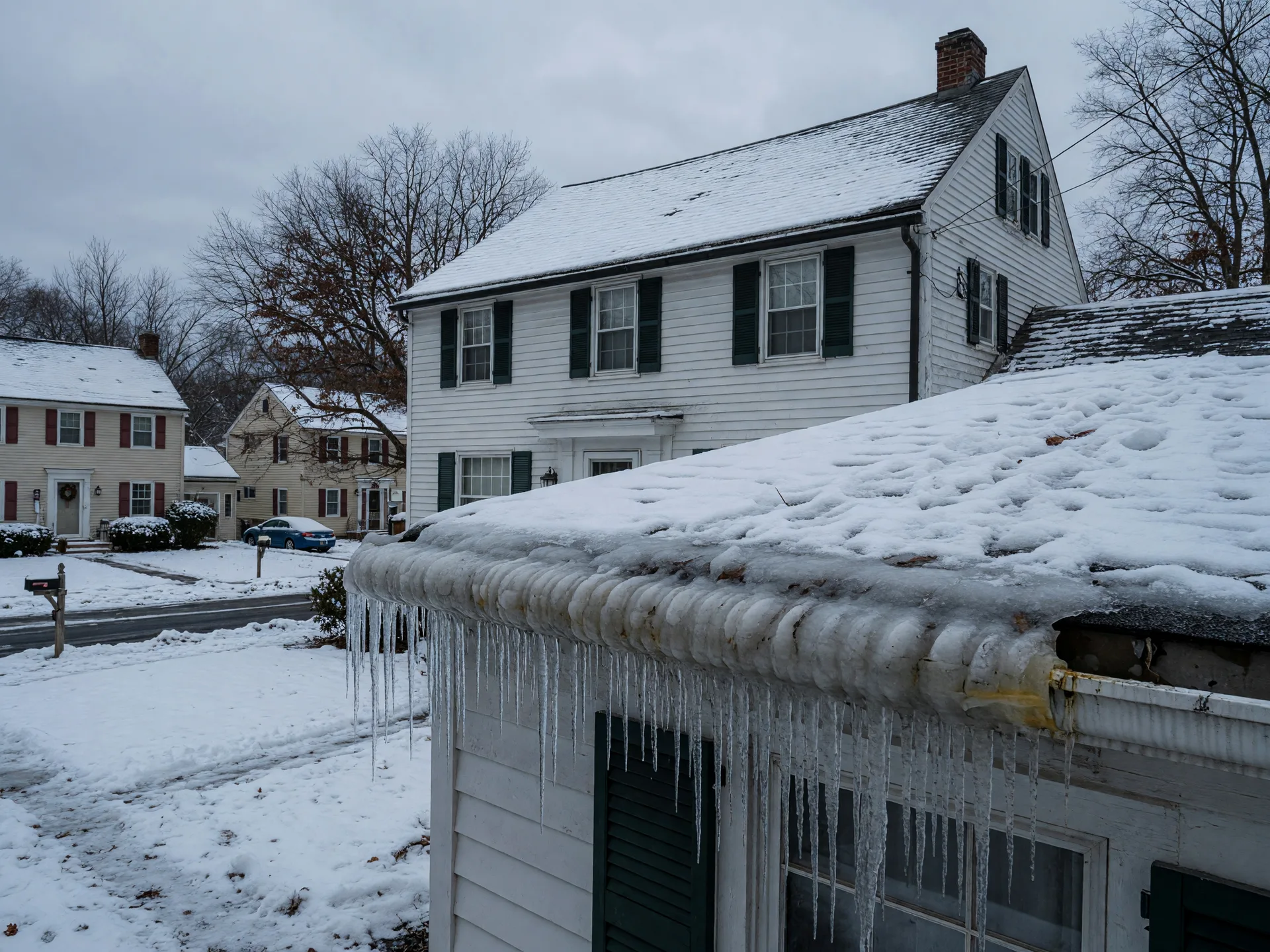
What should you do if an ice dam has already formed?
First, the rules: never chop, axe, hammer, or pry ice off your roof, and do not use a hammer or ice pick, because shingles and flashing are nowhere near as tough as ice, and a slip on a snowy roof is a trip to the emergency room. Also skip rock salt, which corrodes gutters and kills landscaping. The safe DIY method is to fill the leg of a pair of pantyhose with calcium chloride ice melter, tie it off, and lay it vertically across the dam so it melts a channel for water to drain. Do not use it on a metal roof.
The next step is to pull snow off the lower few feet of the roof with a roof rake, working from the ground so you never climb a snowy ladder. Raking the bottom four to six feet is enough to break the melt-freeze loop in most cases. For big dams, leaking ceilings, or two-story houses you cannot safely reach, the professional answer is steam removal: a contractor melts channels through the ice with low-pressure steam, which clears the dam without damaging the shingles. If water is already coming through the ceiling, also open the drywall or pull back wet insulation in that exact spot so it can dry, and call your insurer, because the homeowners insurance guide explains when this kind of damage is covered.
How much does ice dam removal cost in South Jersey?
Paid ice dam removal is not cheap, and it is worth knowing the numbers before the first call. Nationwide, homeowners pay an average of roughly $1,200 per ice dam removal job, with most jobs landing between $650 and $2,400. Steam removal specifically runs about $800 to $2,400, with many pros billing $400 to $600 per hour and a minimum of one to two hours, which reflects the equipment and the roof crew. Cheaper options exist, like chemical pucks at $100 to $400 and manual removal around $800 to $1,800, but manual chipping is the method most likely to damage shingles, and steam is the method most legitimate roof and gutter companies in South Jersey will sell you.
Compare that to the prevention side. An attic air-seal and insulation project on a typical Cherry Hill colonial runs a few thousand dollars, and it pays for itself in energy savings alone, but it also removes the cause of the dam. One removal call plus repairing a stained ceiling can easily approach half of what the attic fix costs, and next winter the dam returns. When snow forecasters at the TV stations call for a nor'easter, the township clears Route 70 and Route 38 fast, and the seasonal home maintenance guide is the place to keep the whole winter prep checklist together.
Does homeowners insurance cover ice dam damage?
In most cases, yes for the damage, no for the removal. A standard HO-3 homeowners policy in New Jersey generally covers sudden water damage inside the home from ice and snow, including the stained ceiling, warped drywall, wet insulation, and any resulting damage to belongings, subject to your deductible. What a standard policy typically will not pay for is the ice dam removal service itself, roof raking, or preventive work like attic insulation, which insurers treat as maintenance. Some policies also exclude damage from long-term or repeated freezing, which is why the fix matters as much as the claim. Document the damage with photos, dry the affected area quickly, and talk to your agent, and note that the flood insurance guide separately covers the water that comes up from the ground, which is a different claim entirely.
Frequently asked questions about ice dams in Cherry Hill
How do I know if my Cherry Hill home has an ice dam?
Look for a thick, ridged band of ice at the roofline or behind the gutters while the rest of the roof is clear, especially combined with icicles that sit above a dry eave. Inside, watch for water stains near exterior walls, damp spots on ceilings, and dripping at windows in cold weather.
Do ice dams ruin your roof?
Ice dams rarely break the shingles themselves. The damage comes from ponding water that backs up under the shingles and roofing felt, soaking the roof deck, attic insulation, and drywall. Repeated soaking can rot decking and framing over time.
Can I just chip the ice off my roof with an axe?
No. Chipping, hammering, or prying ice routinely damages shingles and flashing and is dangerous on a snowy roof. Use calcium chloride pucks in a pantyhose leg laid across the dam, a roof rake on the lower feet of snow, or call a pro for steam removal.
How much does ice dam removal cost?
Homeowners typically pay $650 to $2,400 per job, with the national average around $1,200. Professional steam removal runs about $800 to $2,400, with many South Jersey companies billing $400 to $600 per hour.
Will homeowners insurance pay for ice dam damage?
A standard HO-3 policy in New Jersey generally covers the interior water damage from ice and snow, minus your deductible. It usually does not cover the removal service itself or prevention work like attic insulation, which are treated as maintenance.
Does attic insulation really prevent ice dams?
Yes. Ice dams form when attic heat melts snow on the roof, so a cold roof stops the cycle. Air-seal the attic floor, insulate to the modern R-49 standard for New Jersey, and keep ridge and soffit vents clear.
Should I rake snow off my roof after heavy snow?
Raking the lower four to six feet of snow from the eaves after heavy storms breaks the melt-freeze cycle that builds dams. Work from the ground with a roof rake, and never climb a snowy ladder or stand directly under the dripping icicles.
Ice dams are one of the few winter problems you can fix before winter even starts: seal and insulate the attic, keep the gutters clear, and rake the lower roof after big snows, and the icicles hang as decoration instead of warning. Have questions about Cherry Hill, or about a home you are buying or selling here? Contact Bob Millaway at 856.426.1522, and Bob will point you in the right direction.
Keep Exploring Cherry Hill
More guides from Bob Millaway to help you love where you live.
Written by Bob Millaway
Your Cherry Hill community expert. Have questions about Cherry Hill, winter home prep, or anything about living in town? Contact Bob Millaway at 856.426.1522 or get in touch.