Should You Buy a Generator for Your Cherry Hill Home? Costs, Types, and What to Know
 By Bob Millaway
Cherry Hill loses power almost every storm season. PSE&G serves the township's electricity, and the severe thunderstorms, tropical storms, and winter nor'easters that batter the region also take down the mature oaks and maples that line neighborhoods like Woodcrest, Barclay, and Kingston Estates. When a branch brings down a line, homes here can sit in the dark for hours or days, which is why so many South Jersey homeowners ask whether a generator is worth it. This guide covers how often Cherry Hill loses power, what generators cost, what permits you need, and how to run one safely.
How often does Cherry Hill lose power?
Often enough that it is worth planning for. Tropical Storm Isaias left more than a million customers across New Jersey without power in August 2020, and the remnants of Tropical Storm Ida knocked out tens of thousands more in September 2021. Closer to home, Tropical Storm Debby took out power for hundreds of Cherry Hill homes in August 2024, and the township saw hundreds of additional outages during storms in late October 2025.
The pattern is seasonal: hurricane season runs into November, and winter nor'easters bring ice and wind that snap limbs through January and February. For a family in a colonial or split-level with a sump pump, well pump, or medical equipment, even a single multi-hour outage is a real problem. October is the month to decide before the first big storm.
Portable or standby: which generator is right for your home?
The first decision is between a portable generator and a permanently installed standby unit, and the right choice depends on how long you can tolerate an outage and what you need to keep running.
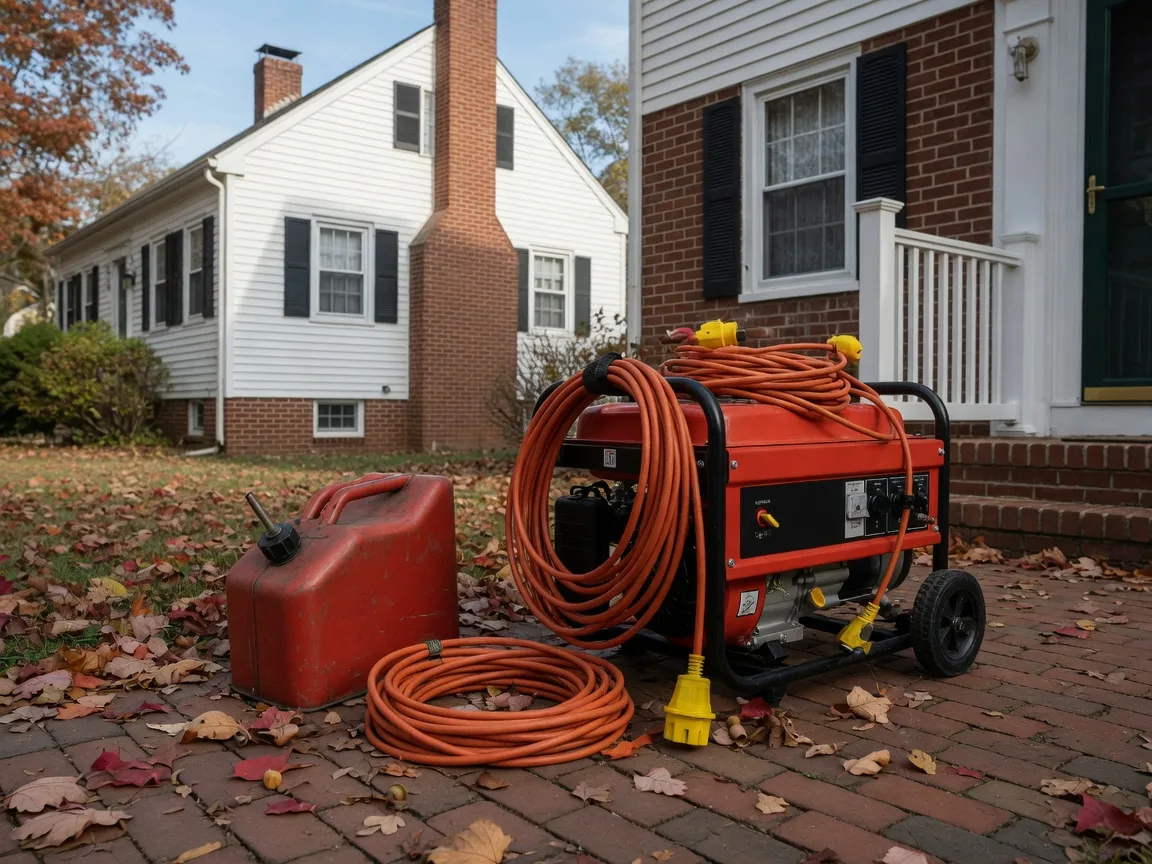
A portable generator is a wheeled unit you roll out, plug appliances into, and start when the power goes out. It is far cheaper, stores in the garage or shed, and can power a fridge, a few lights, a phone charger, and a space heater. The tradeoffs: you have to set it up each outage, run extension cords, keep fuel on hand, and never run it indoors or in a garage, because the exhaust is deadly carbon monoxide.
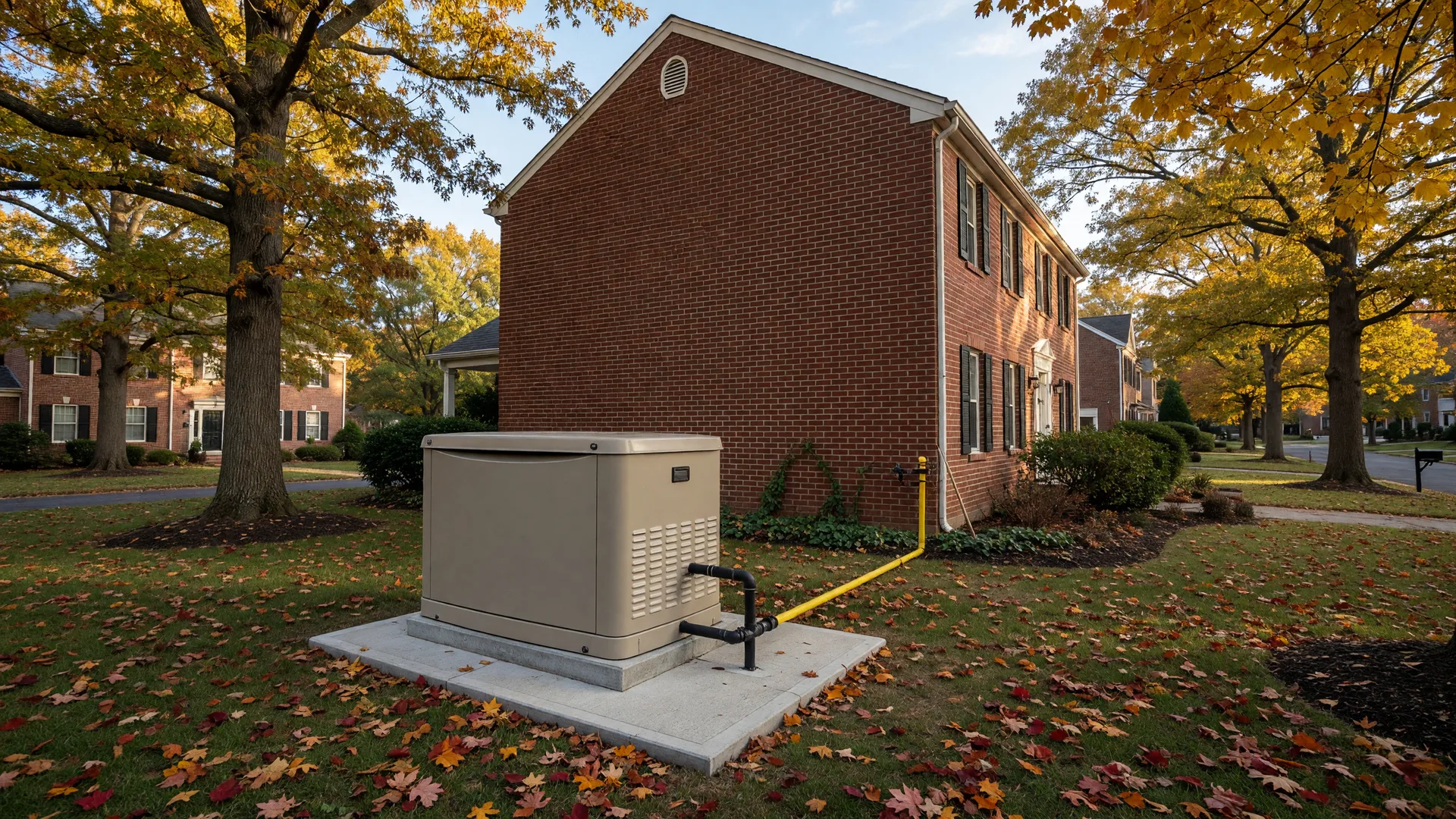
A standby generator is bolted to a concrete pad outside, wired into your electrical panel, and connected to your natural gas or propane line. It senses the outage, starts automatically within seconds, and runs as long as the fuel supply lasts, which for a natural gas unit is essentially indefinitely. It powers your whole panel, including the sump pump, furnace, and fridge, with no extension cords and no fuel jugs. The cost is much higher and it needs a licensed electrician to install, but for many Cherry Hill families it is the difference between a minor disruption and a real emergency.
How much does a standby generator cost installed in New Jersey?
A fully installed standby generator in New Jersey typically runs $8,500 to $18,000, depending on size, fuel type, and whether your electrical panel needs an upgrade. A 10 kW essentials unit, enough to run the sump pump, furnace, fridge, and lights, usually lands around $8,500 to $11,000. A 14 to 18 kW unit that covers a typical colonial with central air lands around $11,000 to $14,500, and a larger 22 to 26 kW whole-home unit runs higher, especially if your panel must be upgraded.
That installed price includes the generator itself, the concrete pad, the transfer switch, wiring, the gas or propane connection, permits, and labor. When you compare quotes, make sure each one itemizes those pieces, because a low bid that leaves out the transfer switch or the panel work is not a real comparison. Get at least three written quotes from licensed, insured electricians, and the contractor guide has a vetting checklist for any home project.
How much does a portable generator cost?
A portable generator costs $500 to $2,500 for the unit itself. A basic gasoline model around 3,000 to 5,000 watts, enough for a fridge, lights, and a phone charger, runs about $500 to $900. A mid-size 7,000 to 9,000 watt unit that can also run a space heater or a window AC lands around $1,000 to $1,800, and a larger dual-fuel model runs about $1,300 to $2,500.
Prices swing with storm season, so buying before a storm is cheaper than buying during one. Budget for the extras: heavy-duty extension cords rated for the wattage, a carbon monoxide alarm, and fuel stored safely in an approved can.
Do you need a permit to install a standby generator in Cherry Hill?
Yes. Installing a standby generator in New Jersey requires an electrical permit, and a natural gas or propane hookup requires a plumbing or gas permit as well. The work must comply with the State Uniform Construction Code, and a final inspection is required before the unit can be activated. Cherry Hill's construction office handles the permitting, and your installer should pull the permits and schedule the inspections as part of the job, so confirm that is in your written quote.
New Jersey law also allows automatic standby generators in certain residences without separate zoning or planning board approval when they meet code, which simplifies the process for most single-family homes. Before you buy, have your installer confirm your natural gas service has enough capacity and your panel can handle the load. The permits guide walks through how home improvement permitting works in the township.
Which fuel should your generator use: natural gas or propane?
For a standby generator, natural gas is the most convenient choice in Cherry Hill because it is piped to the home and never runs out. A natural gas unit starts automatically and can run for days without you touching it, which is the whole point of a standby system. The tradeoff is that it depends on the gas line staying intact, which it almost always does even when electric lines come down.
Propane is the alternative. A propane standby generator stores its fuel in a tank you own or rent, which means it works even if gas service is interrupted, but you have to keep the tank filled and plan for how long an outage might last. For a portable generator, dual-fuel models that run on gasoline or propane give you flexibility, since propane stores better than gasoline. The utilities guide explains how gas and electric service work in the township.
Where should a standby generator sit on your property?
A standby generator must sit outdoors on a level concrete pad, at least 5 feet from any combustible building wall and 5 feet from windows, doors, or other openings, per the manufacturer's clearance specs and the building code. In practice, most Cherry Hill installers place the unit along a side yard or behind the house, out of sight from the street, which matters in neighborhoods where curb appeal counts at resale.
The generator does make noise, roughly the level of a running central air conditioner, so it is usually placed away from bedroom windows and neighbor property lines where possible.
How do you run a portable generator safely?
Safety is non-negotiable with a portable generator, because the exhaust produces carbon monoxide, an odorless gas that can be fatal. Never run a portable generator indoors, in a garage, in a basement, or near an open window or door, even with the door open. Place it at least 20 feet from the house, on a dry surface, and point the exhaust away from doors and windows. Install a battery-powered carbon monoxide alarm on every level of the home and test it monthly, which New Jersey law requires anyway in any home with a fuel-burning appliance.
Use heavy-duty extension cords rated for the wattage you draw, keep the generator dry, and let it cool before refueling. If you want a portable generator to power hard-wired circuits like a sump pump or well pump, the safe answer is a manual transfer switch installed by an electrician, which feeds selected circuits without backfeeding the panel. Backfeeding through a regular outlet is dangerous to you and to line workers, so never do it. If your sump pump is the worry, the basement flooding guide covers pump care before the next storm.
Does a generator add value when you sell your home?
A standby generator is one of the few home improvements that shows up in a listing and in a buyer's mind at the same time. In a township where buyers already know the power goes out in storms, a home with a permanent natural gas generator is a genuine selling point, especially for buyers moving from a city or from a newer development with buried lines. It does not raise the price the way a kitchen remodel does, but it can help a home sell faster and reduce the chance of a buyer asking for a credit after an inspection.
If you are planning to sell, keep the maintenance records and the permit paperwork, because a buyer's inspector will ask about the installation. The real estate market guide covers pricing and timing.
Frequently asked questions about generators in Cherry Hill
How much does a standby generator cost installed in New Jersey?
A fully installed standby generator typically runs $8,500 to $18,000. A 10 kW essentials unit lands around $8,500 to $11,000, a 14 to 18 kW unit around $11,000 to $14,500, and larger whole-home units cost more, especially if your electrical panel needs an upgrade.
How much does a portable generator cost?
A portable generator costs $500 to $2,500 for the unit. Basic models run about $500 to $900, mid-size units around $1,000 to $1,800, and larger dual-fuel models about $1,300 to $2,500, plus extension cords and a carbon monoxide alarm.
Do I need a permit to install a standby generator in Cherry Hill?
Yes. An electrical permit is required, and a natural gas or propane hookup needs a gas permit too. The work must comply with the State Uniform Construction Code and pass a final inspection before activation.
Can I run a portable generator inside my garage?
No. Never run a portable generator indoors, in a garage, in a basement, or near an open window or door. The exhaust produces carbon monoxide, which is odorless and can be fatal. Place it at least 20 feet from the house.
Is natural gas or propane better for a standby generator?
Natural gas is more convenient because it is piped to the home and never runs out, so a natural gas unit can run for days automatically. Propane stores in a tank you keep filled but requires planning for how long an outage might last.
Does a whole-house generator raise home value?
A standby generator is a genuine selling point in Cherry Hill, where buyers know power goes out in storms. It helps a home sell faster and reduces the chance of a buyer asking for a credit, though it does not raise the price the way a major remodel does.
How often does Cherry Hill lose power?
Cherry Hill loses power almost every storm season. Recent storms, including Tropical Storm Debby in August 2024 and storms in late October 2025, knocked out power for hundreds of homes, and hurricane season and winter nor'easters bring more risk through the fall and winter.
The right generator for your Cherry Hill home depends on how long you can tolerate an outage, what you need to keep running, and your budget. A portable unit is a smart, affordable start for many families, while a natural gas standby generator is the permanent answer for homes with a sump pump, well pump, or medical needs. Have questions about Cherry Hill and whether a generator makes sense for your house? Contact Bob Millaway at 856.426.1522, and Bob will point you to the right installer and the right move for your home.
Keep Exploring Cherry Hill
More guides from Bob Millaway to help you love where you live.
Written by Bob Millaway
Your Cherry Hill community expert. Have questions about Cherry Hill and keeping your home ready for every season? Contact Bob Millaway at 856.426.1522 or get in touch.