How to Prevent Frozen Pipes in Cherry Hill, NJ: A Winter Plumbing Guide
 By Bob Millaway
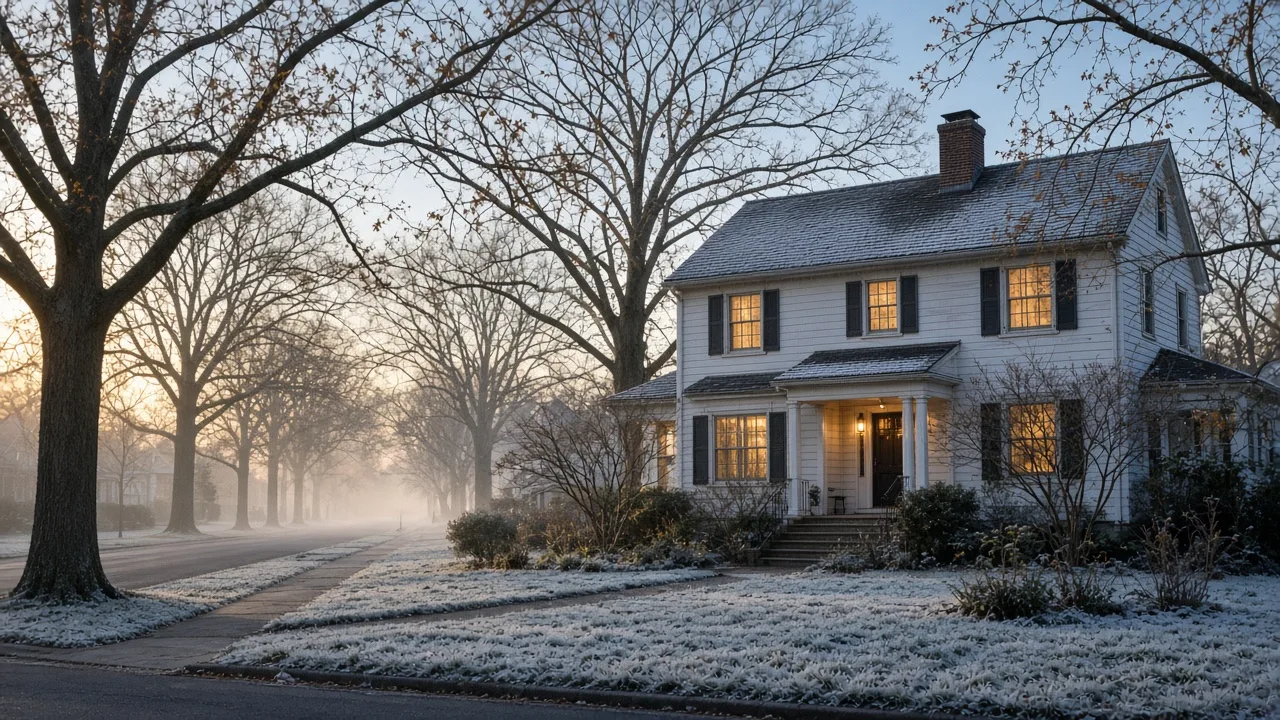
Frozen pipes are one of the most common winter home emergencies in Cherry Hill, and one of the most preventable. When water freezes inside a supply line it expands with enough force to split copper, crack PVC, and blow apart fittings, and a single burst pipe can pour hundreds of gallons of water into a basement in under an hour. The good news is that a slow drip, a few foam pipe sleeves, and a shutoff valve you know how to reach protect most homes completely. This guide covers when Cherry Hill pipes actually freeze, which houses are most at risk, and the exact checklist to run before the first hard freeze.
When do pipes actually freeze in Cherry Hill?
Pipes rarely freeze on a 30-degree night. The danger zone starts when outdoor temperatures hold at about 20°F for six hours or more, which is why the worst burst-pipe calls happen in late December and January rather than during the first cold snap. Exposed, uninsulated pipes in a crawlspace or unheated garage can freeze at higher temperatures, around 25°F to 28°F, because they have nothing shielding them from the air. Cherry Hill's first frost usually arrives in late October, and the first hard freeze, 28°F or lower, typically lands in mid-November, so November is the month to prepare while there is still time to work outside comfortably.
Wind matters more than people expect. A stiff northwest wind blasting the side of a house pulls heat out of the wall cavity faster, which is why the kitchen and bathroom sinks on an exterior wall freeze before the interior ones do. That is also why the homes most affected are not the newest ones, but the draftiest ones. If your house has ever felt cold against an outside wall on a windy night, that wall deserves attention before the temperature drops.
Which Cherry Hill homes are most at risk?
Most of Cherry Hill's housing stock was built between the 1950s and the 1970s, and those houses share the classic freeze-risk profile: crawlspaces, unheated basements, and plumbing runs along exterior walls. Neighborhoods like Woodcrest, Kingston Estates, Ashland, and the older sections of Barclay and Erlton are full of ranch and split-level homes with supply lines running through unconditioned space, and that is where the after-hours plumber calls come from. Homes with finished basements that are kept warm year-round have a real advantage, because the pipes inside the heated envelope almost never freeze.
The riskiest spots in any house are the same five: pipes in a crawlspace or unheated basement, laundry hookups in an unheated garage, attic supply lines, the sink on an exterior wall, and any pipe that runs through a cabinet against an outside wall. Add a weeklong vacation with the heat turned down, and you have the classic January claim. If you are house hunting, asking where the water main enters and whether the basement is heated tells you a lot about winter risk before you ever make an offer.
What should you do before the first hard freeze?
The November checklist takes about 20 minutes and covers the causes of nearly every frozen-pipe call a plumber sees in South Jersey. Run it before the first hard freeze, and again if you buy a different house.
- Find the main water shutoff and confirm it turns. In most Cherry Hill homes the main valve is in the basement near the front wall where the service line enters, often beside the water meter; in houses with crawlspaces it may be under the floor near the point of entry. Test it now, and label it with a tag so anyone can find it in an emergency.
- Disconnect hoses and drain the outdoor spigots. Remove every garden hose, close the interior shutoff valve for each outdoor faucet if you have one, open the faucet to drain the line, and leave it open for winter. A frozen sillcock can crack the pipe behind it and flood a finished basement. The lawn and garden winterizing guide covers the sprinkler blowout that protects the buried lines too.
- Insulate exposed pipes. Foam pipe sleeves are a few dollars per six-foot length and slip over the copper or PVC in your crawlspace, garage, and basement. For pipes that run through truly exposed spots, UL-listed heat tape with a thermostat is the next step up.
- Seal the air leaks around pipes. Wherever a pipe enters the house, the gap around it lets freezing air reach the line. Caulk or spray foam those openings from the inside, and check the rim joist area of the basement for the same draft.
- Close crawlspace vents and doors. If your crawlspace has foundation vents, close them for winter and keep the access door shut so the space stays closer to indoor temperature. If the crawlspace is insulated, confirm the insulation is still in place under the floor above it.
The fall home maintenance checklist sequences these tasks against the frost date so nothing gets forgotten, and the Cherry Hill utilities guide explains how water service works, including what new residents should know about the meter and the shutoff.
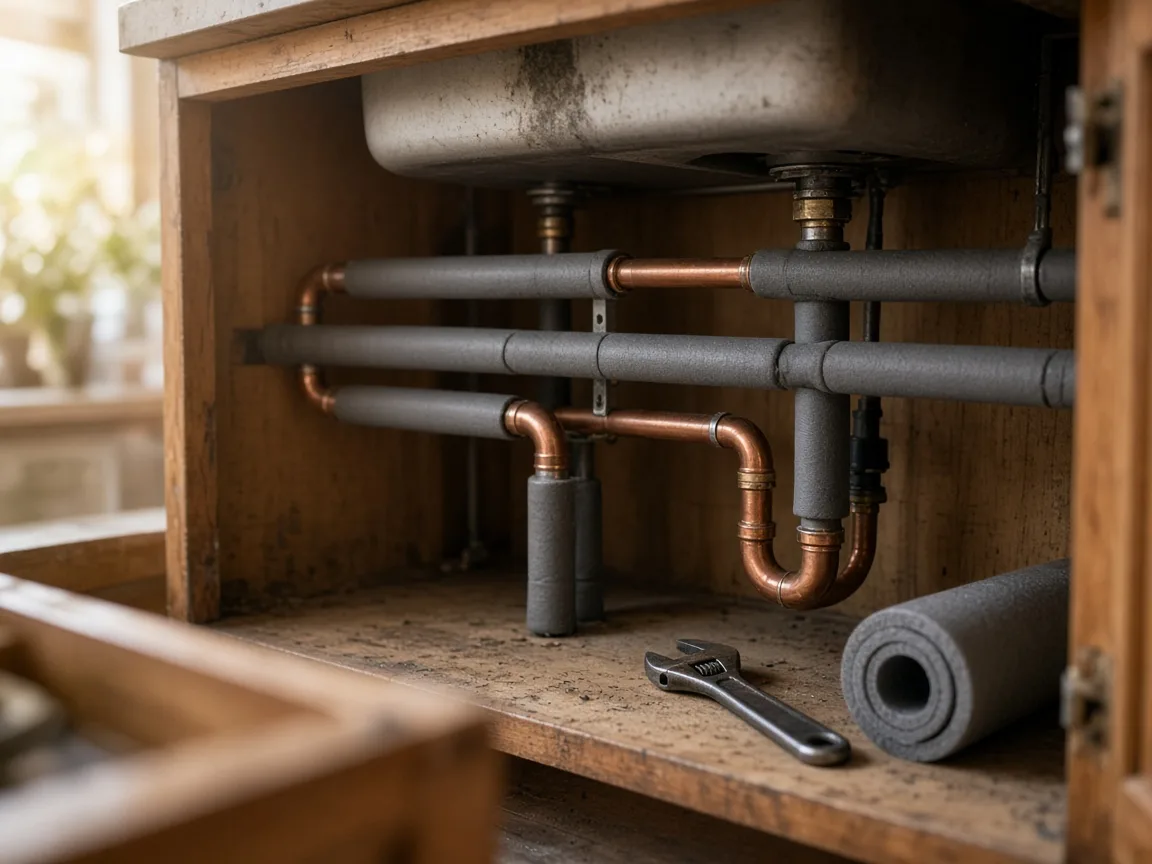
Foam pipe sleeves cost a few dollars and take minutes to install, and they cover most of the freeze risk in a crawlspace or unheated basement.
How do you protect pipes on the coldest nights?
When the forecast calls for a sustained deep freeze, a few habits carry your pipes through the night. Open the cabinet doors under the kitchen and bathroom sinks that sit on exterior walls so warm room air can reach the pipes. Let a cold tap drip slowly, a steady trickle rather than a stream: moving water is far harder to freeze, and the drip also relieves pressure if a line does ice up. During the worst nights, letting a hot-water tap trickle as well protects the hot side, which freezes first in many homes because it is used less.
Keep the thermostat at the same setting day and night during a hard freeze, or at least never below 55°F, and keep the garage door closed if any plumbing runs through the garage. If you are leaving town, do not turn the heat off, just turn it down to 55°F, and ask a neighbor to check the house after any deep-freeze night. The same rule applies to an empty house on the market in winter: a vacant listing with the heat off is how a $200 repair becomes a $5,000 insurance claim.
How do you know a pipe is frozen, and how do you thaw it safely?
The first sign is usually weak or no water at one faucet, followed by frost on an exposed pipe or a gurgling sound when you open a tap. If you catch it early, you can often thaw the line yourself. Leave the faucet open, then apply gentle heat starting at the faucet end and working toward the frozen section: a hair dryer on low, a space heater set back from the pipe, or towels soaked in warm water. Keep applying heat until full water pressure returns, which tells you the line is clear.
Never use an open flame, a torch, or a charcoal heater on a pipe, and never leave a space heater running unattended. If you cannot find the frozen section, cannot reach it, or water has already appeared, shut off the main valve and call a licensed plumber. And if you suspect a pipe has already burst, shut off the water immediately, open the lowest faucets to drain the system, and turn off electricity near any standing water before you touch anything. The basement flooding guide covers the sump pumps and water-damage recovery that matter once water is in the house.
What does a frozen or burst pipe cost to fix in South Jersey?
Plumbers in New Jersey typically bill $150 to $300 per hour, and an after-hours emergency call adds a $150 to $250 trip charge before any work is done. Most burst-pipe repairs land between $500 and $2,000: a small exposed section of pipe you can see is at the low end, while a pipe inside a wall, or one that flooded a finished basement, is at the high end. Worst cases run $5,000 or more once drywall, insulation, and water-damage restoration are added to the plumber's bill. Measured against a $20 foam sleeve and a 20-minute checklist, prevention is the best bargain in winter home care.
Does homeowners insurance cover frozen pipes?
Most standard homeowners policies cover burst-pipe damage that comes from a frozen line, including the drywall, flooring, and belongings that get wet. The catch is that coverage is usually tied to how the home was being used: policies commonly require that the heat was maintained and the home was occupied, so a burst pipe in a vacant house with the heat off can be denied. It is also worth remembering that groundwater flooding from a high water table, the other great Cherry Hill winter and spring risk, is a separate flood event that a standard policy does not cover. The homeowners insurance guide explains what a Cherry Hill policy covers and where the gaps are, and the flood zone guide sorts out the flood side.
Frequently Asked Questions
At what temperature do pipes freeze?
Household pipes typically freeze when outdoor temperatures hold at about 20°F for six hours or more. Exposed, uninsulated pipes in a crawlspace or unheated garage can freeze at 25°F to 28°F because they have no protection from the air.
Should I let my faucets drip in Cherry Hill?
Yes, on the coldest nights. A slow trickle from a cold tap keeps water moving, which is much harder to freeze, and it relieves pressure if a line does ice up. During a deep freeze, letting a hot-water tap trickle too protects the hot side, which freezes first in many homes.
How long can pipes stay frozen before they burst?
There is no set timer: freezing water expands and can split a pipe within hours of the line fully freezing, and the burst often happens as the ice thaws, not while it is solid. Thaw the pipe gently and quickly, and shut off the main water valve at the first sign of trouble.
What should I do right after a pipe bursts?
Shut off the main water valve immediately, open the lowest faucets to drain the system, turn off electricity near any standing water, and call a licensed plumber. Document the damage with photos for your insurance claim and start drying the area right away to limit mold and water damage.
Does homeowners insurance cover a burst pipe?
Most standard policies cover damage from a pipe that bursts because it froze, as long as the home was heated and occupied at the time. Coverage can be denied if the house was vacant or the heat was off, and groundwater flooding is a separate risk that a standard policy does not cover.
Where is the main water shutoff in my Cherry Hill home?
In most Cherry Hill homes the main shutoff is in the basement near the front wall where the service line enters, often beside the water meter. In houses with crawlspaces it is usually under the floor near the entry point. Find it now, test it, and label it so anyone can reach it in an emergency.
Keep Exploring Cherry Hill
More homeowner guides from Bob Millaway to help you love where you live.
Written by Bob Millaway
Your Cherry Hill community expert. Have questions about Cherry Hill? Contact Bob Millaway at 856.426.1522 or get in touch.