Water Heater Maintenance and Replacement in Cherry Hill, NJ: Costs, Lifespan, and What Homeowners Should Know
 By Bob Millaway
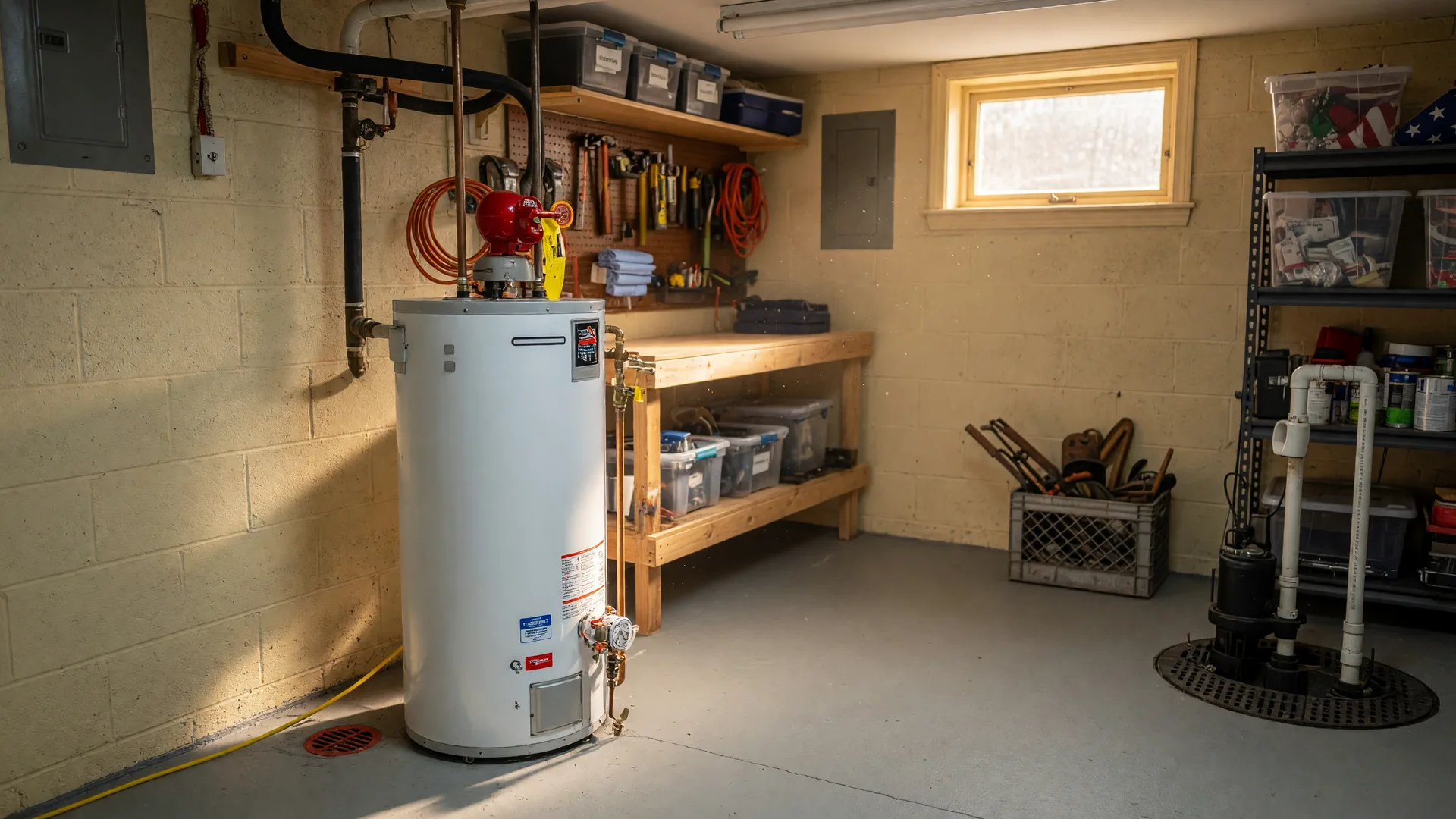
A water heater is supposed to run for a decade with almost no attention, which is exactly why it fails at the worst possible moment. In Cherry Hill, where much of the housing stock dates from the 1960s through the 1990s, many homes are now on their second or even third unit, and the difference between a $300 annual habit and a $2,500 emergency replacement comes down to knowing how these appliances age. This guide covers how long a tank heater lasts, the maintenance that actually extends its life, the warning signs that it is finished, and what a replacement honestly costs in South Jersey.
How long does a water heater last in Cherry Hill?
Plan on 8 to 12 years for a traditional tank water heater, with 10 years as the number most plumbers use when you ask. Electric models tend to last a little longer than gas models, partly because they have no burner and no combustion chamber, and a unit that gets regular maintenance sits comfortably at the top of that range.
Age matters because a tank does not quietly wear out. The protective lining inside a glass-lined steel tank degrades over time, the anode rod that sacrifices itself to protect the steel gets consumed, and the sediment that settles at the bottom never disappears on its own. In a neighborhood like Woodcrest, Barclay, or Kingston Estates, where many original owners have raised families in the same house, it is common to find the water heater from the original construction still in the basement. If your unit is past its 10th birthday and you do not remember its service history, it is living on borrowed time, and it makes sense to start planning rather than waiting for the rust-colored shower.
How do you know when your water heater needs replacing?
Most failures give warning before they stop entirely. Look for these signs:
- Rust-colored water. A little rusty water from the hot tap is the classic sign that the tank lining is failing and the steel is corroding. Rust in the hot water is a replacement signal, not a repair signal.
- Rumbling or popping noises. That knocking sound during a draw is boiling trapped in a thick layer of sediment at the bottom of the tank. It means the tank floor is overheating, and it shortens life even when the water still gets hot.
- Water pooling at the base. Any leak, even a slow one, means the tank shell is compromised. A leaking tank gets worse, not better, and the cost of water damage to a finished Cherry Hill basement quickly exceeds the cost of the unit.
- Inconsistent hot water. Diminishing hot water, water that runs warm for minutes and then cold, or a pilot that will not stay lit all point to a unit that is past useful service.
- Age plus any of the above. A 12-year-old tank with a flooded pan is an easy decision. The seasonal home maintenance guide covers the rest of the mechanical systems a home inspection will check, so you can see the water heater in context.
What maintenance does a water heater actually need?
The two jobs that matter most are flushing the tank and checking the anode rod, and both are cheap compared to a replacement.
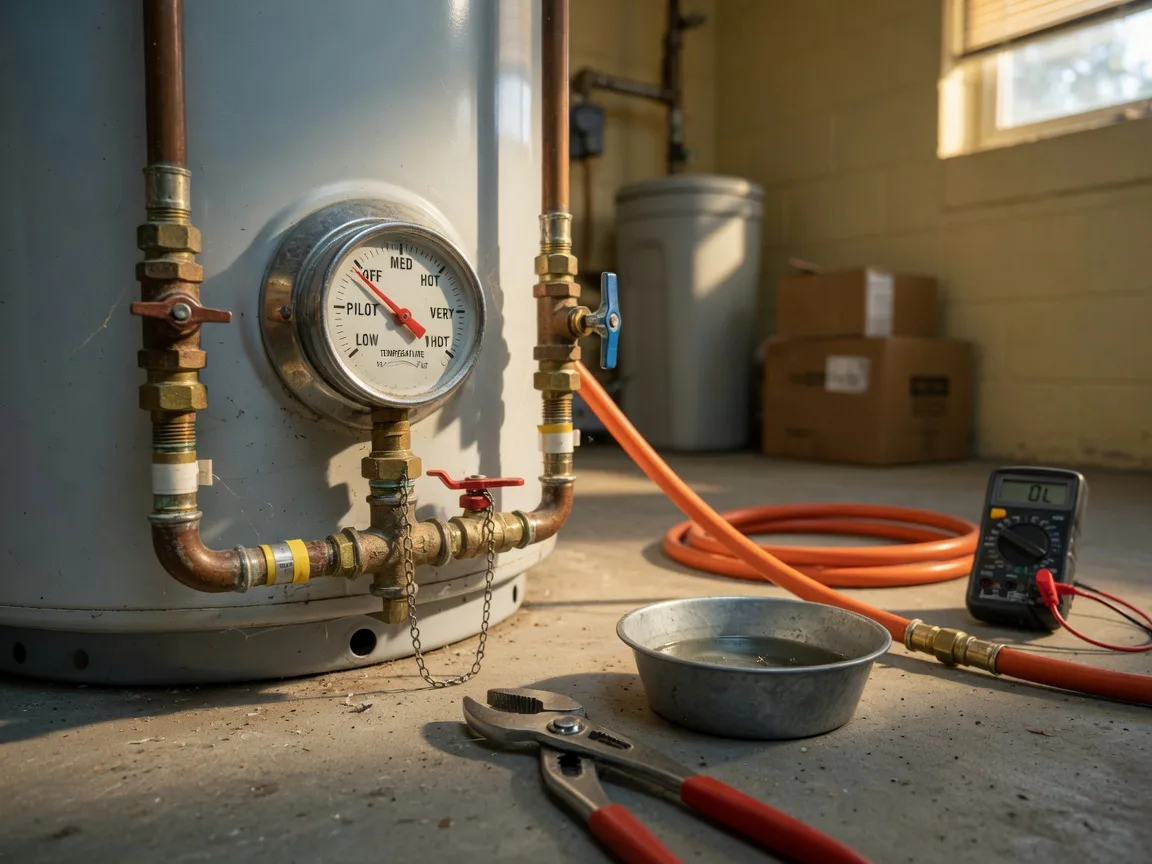
Flushing once a year, in the fall before the heavy-use winter months, drains the sediment that settles at the bottom. The process is simple: attach a garden hose to the drain valve at the base, run it to a floor drain or outside, open the valve, and let the tank push the cloudy water out until it runs clear. On an older unit that has never been flushed, skip this step entirely, because a decade of packed sediment can hold the drain open and make the job leak. The fall home maintenance checklist is a good place to schedule the flush alongside the furnace service and the sprinkler blowout.
The anode rod, a magnesium or aluminum rod inside the tank, is the part that actually protects the steel from corrosion. It is consumed over time, and a plumber can check it during any service call and replace it for a modest cost, typically extending tank life by years. On gas units, the annual tune-up should also include a check of the burner and the temperature and pressure relief valve, the safety device that vents the tank if pressure builds. That valve should be tested gently once a year, and a unit that weeps from the relief valve needs attention before it fails.
Set the thermostat at 120 degrees for daily use. It keeps the burn risk down for kids and saves energy; the exception is a dishwasher without its own internal heater, which may need 130 to sanitize.
Why does sediment build up faster in some Cherry Hill homes?
It depends on whose water you are on. Cherry Hill is served mainly by New Jersey American Water's Western System, while parts of the township, including areas north and east, get water from the Merchantville-Pennsauken Water Commission. Published hardness figures for the area vary by source, and some of the wells that feed the region draw moderately hard water that leaves more mineral deposit behind. If you have hard water, sediment builds faster, the anode rod wears out sooner, and an annual flush is not optional.
A simple water test tells you which camp you are in, and a water softener, in the homes where it makes sense, protects the water heater as a bonus. If you are moving into a Cherry Hill home and do not know the local water setup, the utilities guide walks through who supplies water, gas, and electric in the township and how to transfer service into your name.
How much does a water heater replacement cost in Cherry Hill?
A full replacement, parts and labor, runs roughly $1,200 to $4,500 in New Jersey, with most quotes for a standard tank landing between $2,000 and $2,500. Gas units cost a bit more than electric because of the venting and gas connections involved, and the quote should always include hauling away the old tank, which is not a curb item in Cherry Hill.
Where the price varies: tank size (40 gallons covers most households, but a house with teenagers needs 50), efficiency rating, the difficulty of getting the old unit out of a tight basement, and whether the new unit needs updated piping or a new vent. A licensed plumber quotes the full job, not just the cost of the tank you can find at the big-box store, and the installed price is what you should compare between companies. A little careful vetting goes a long way: ask for licensed, insured plumbers with several references, and get at least three quotes. That same diligence applies to any contractor on your home, and the contractor guide has a checklist you can reuse.
Should you go tankless, or a heat pump water heater instead?
Tankless units heat water on demand and last longer, often 20 years, but they cost more to install, roughly $2,000 to $4,500 in this region, and they need enough gas supply and venting, which an older Cherry Hill home may not have without extra work. A heat pump water heater is the efficiency standout: it uses electricity to move heat rather than generate it, and it can cut water heating costs by a large margin over a standard electric tank. It needs floor space and a little clearance, and it works best in a basement that does not freeze.
Both options make the most sense when you are already replacing a failed unit, because the labor is the same and the payback starts immediately. PSE&G, the gas and electric utility for most of Cherry Hill, regularly publishes rebates for high-efficiency water heating equipment, including heat pump models, so check current incentives before you buy. The energy savings guide covers the rebate process and the other weatherization upgrades that pay off fastest in a Cherry Hill home.
Do you need a permit to replace a water heater in Cherry Hill?
Yes. New Jersey requires a plumbing permit for a water heater replacement, and Cherry Hill enforces the state Construction Code, so the job needs to be inspected. A reputable plumber pulls the permit, usually a modest fee that is part of your quoted price, and schedules the inspection, so you should never have to handle it yourself. If you are planning any larger renovation that touches plumbing or structure, the home improvement permit guide explains what the township requires and how the process works.
Does water heater age matter when you sell a home?
It shows up at the inspection table, where a water heater past its 12th birthday in a basement with a rust-stained pan is exactly the kind of line item that makes a buyer ask for a credit. Sellers can get ahead of it: a newer unit with a visible service date, or a receipt for a recent replacement, is a quiet selling point that never makes the listing photos. If you are selling in Cherry Hill, the real estate market guide covers pricing and timing, and the maintenance guide lists the other small items worth handling before the inspection, because buyers in a market like this compare homes block by block, and a well-cared-for mechanical room reads the same way a fresh coat of paint does.
The cheapest water heater repair in Cherry Hill is the one you prevent with a yearly flush and a look at the dates. Have questions about Cherry Hill and what it takes to keep a home here in great shape through every season? Contact Bob Millaway at 856.426.1522, and Bob will point you to the right plumber, the right checklist, and the right move for your house.
Keep Exploring Cherry Hill
More guides from Bob Millaway to help you love where you live.
Written by Bob Millaway
Your Cherry Hill community expert. Have questions about Cherry Hill and keeping your home in great shape every season? Contact Bob Millaway at 856.426.1522 or get in touch.