Is Radon a Problem in Cherry Hill, NJ?
 By Bob Millaway
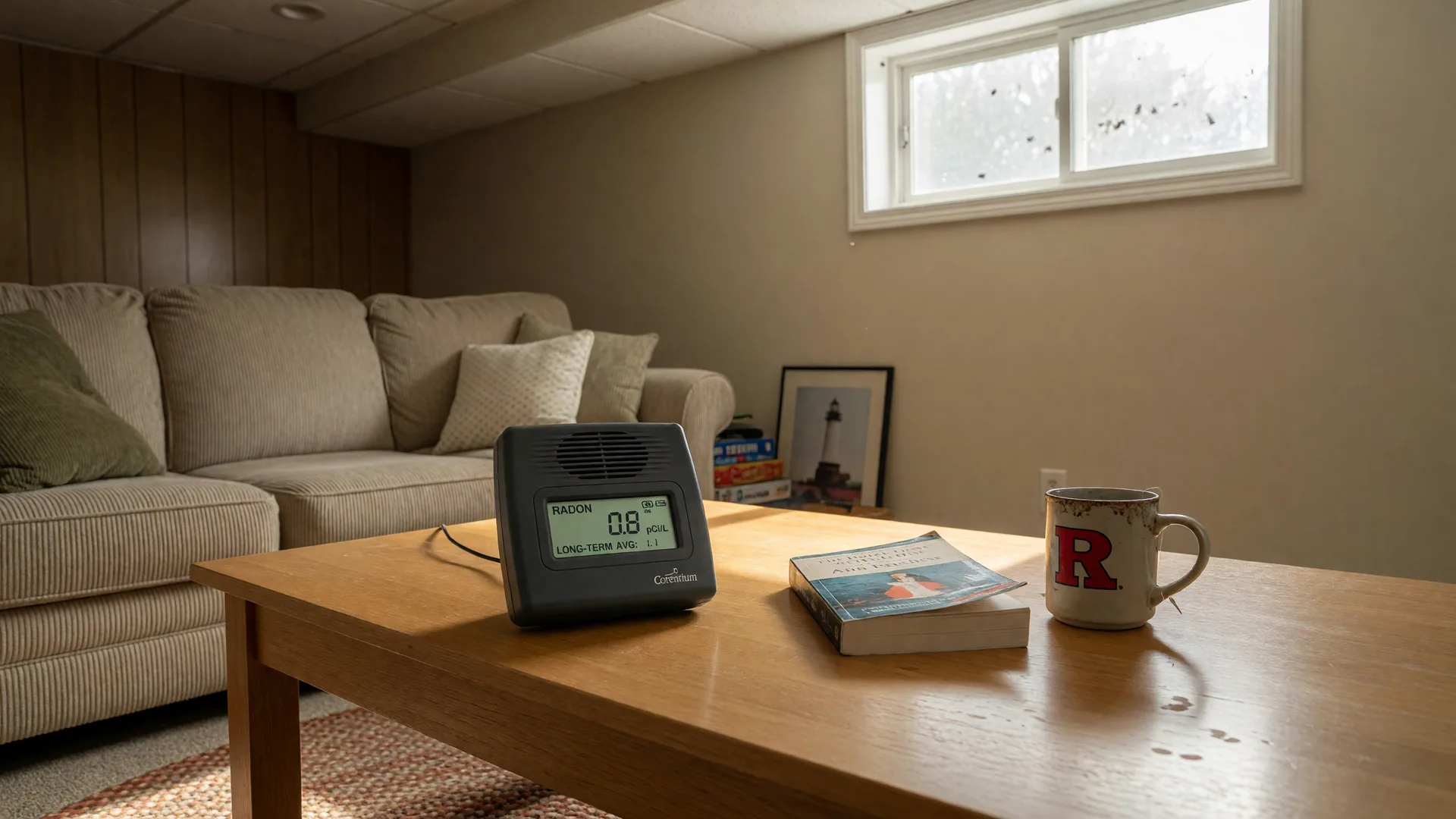
Radon is a documented, local issue, not a vague national worry. NJDEP data shows that 2,003 of the 10,319 radon tests taken in Cherry Hill Township came back at or above the EPA action level of 4 pCi/L, roughly 19 percent of every test on record. That makes Cherry Hill one of the higher-testing municipalities in the region, and it is exactly why New Jersey health officials recommend that every home in the state be tested, no matter what a radon map says. The test is cheap, the process takes days, not months, and it is the only way to know your own number, because radon is invisible, odorless, and tasteless.
What is radon and why does it belong on your checklist?
Radon is a radioactive gas produced by the natural breakdown of uranium in soil and rock. It moves up through the ground and enters homes at the lowest level, then gets trapped indoors as the house breathes. When you inhale radon decay products, they can damage the cells lining your lungs, and the EPA identifies radon as the second leading cause of lung cancer after smoking, and the leading cause among people who have never smoked. The risk is cumulative, which is why a decade of exposure in a home with an elevated level matters far more than a single season.
New Jersey takes the gas seriously enough to map every municipality. The NJDEP Radon Potential Map assigns Cherry Hill to Tier 2, the moderate potential tier, alongside most of South Jersey. The agency is equally clear that the tiers are averages, not verdicts: elevated levels have been found in every tier of the map, which is why NJDEP's standing advice is to test every home in the state. If you have a finished basement where your kids do homework, or a lower level where you spend evenings, the question is even more relevant to you than to a homeowner who sleeps two floors up.
Is radon actually common in Cherry Hill?
Yes, more common than most people in town assume. The NJDEP testing record for Cherry Hill Township runs to 10,319 results, and 2,003 of them, about 19 percent, came back at or above the 4 pCi/L action level. To put that in context, testing across nearby Burlington County averages around 2 pCi/L, with roughly 11 percent of readings above the action level in the countywide data reported to the Burlington County Times. Cherry Hill's 19 percent rate sits at the higher end of the range for the area, driven in no small part by the township's stock of mid-century homes with concrete basements and crawl spaces built in the 1950s through the 1970s.
None of this means your house has radon. It means the odds here are high enough that testing is a routine part of responsible homeownership, the same way you change the furnace filter or clear the gutters. The difference is that radon is the one hazard you cannot see, smell, or hear, so the test is the entire tool kit.
How do you test your home for radon?
Start with a do-it-yourself short-term test, the kind sold at hardware stores and online for well under $30. In Cherry Hill, the Home Depot on Route 70 stocks them, and so do most hardware stores. A short-term charcoal or electronic test sits in your home for two to seven days, then goes into the mail to a lab. Set it up on the lowest livable level of the home, a finished basement or the first floor if you have none, and follow the closed-house rule: keep windows and doors closed for 12 hours before the test starts and throughout the test period, so you measure the air your family actually breathes instead of a cross breeze.
- Choose a good spot. Place the kit in a room you use regularly, away from exterior walls, drafts, bathrooms, and kitchens where humidity and airflow skew the reading.
- Give it the full window. The longer a short-term test runs, the steadier the result, so leave it in place for the full recommended period.
- Consider a long-term test. Radon levels swing daily and seasonally, and a 3 to 12 month test gives the truest yearly average. Winter is the classic New Jersey testing season because homes are sealed up and levels read their highest, so September through the heating season is a smart window to start.
- Use certified professionals for confirmation. New Jersey law requires anyone who tests or mitigates radon for hire to be NJDEP-certified, so if you want a professional measurement, the NJDEP radon program page lists certified companies, and the state's radon hotline at 1-800-648-0394 can point you to one.
Burlington County has periodically distributed free test kits through its health department, and programs like that come and go, so it is worth a quick call to the county office before you buy a kit.
What do radon test results mean?
Radon is measured in picocuries per liter, or pCi/L, and the EPA action level is 4 pCi/L. Here is how to read your number:
- Under 2 pCi/L. Low. Retest once every couple of years, after a major renovation, or after you finish the basement.
- Between 2 and 4 pCi/L. The EPA says to consider fixing the home. Run a follow-up long-term test before you decide, because the boundary is where short-term noise matters most.
- 4 pCi/L or higher. Fix the home, and confirm the reading with a second test before you spend money on mitigation.
The EPA's goal is to bring indoor levels as close to outdoor levels as possible, and outdoor air in the United States averages around 0.4 pCi/L. A mitigation system rarely has trouble getting a home below 2 pCi/L, and often far lower.
Where does radon get into a Cherry Hill home?
Radon enters through the parts of the house that touch the ground. In the classic Cherry Hill neighborhoods like Kingston Estates, Barclay, Woodcrest, Erlton, and Ashland, that means poured-concrete basements, crawl spaces, and slab-on-grade additions, the construction standards of the 1950s through the 1970s. The common entry points are cracks in the foundation slab and walls, the joints where the slab meets the foundation, sump pits, crawl space dirt floors, and the gaps around utility pipes and wires that run through the concrete.
The good news is that these are the same cracks and openings you inspect during routine upkeep, and sealing them is an ordinary maintenance job. The seasonal checks in the home maintenance guide are a natural time to walk the basement with a flashlight and a tube of sealant. The housing options guide explains which Cherry Hill home styles, from colonials and split-levels to townhouses with slab foundations, come with which testing considerations. And if you live in a townhouse or condo, test the lowest unit level you occupy; soil gas does not respect property lines.
How much does radon mitigation cost in New Jersey?
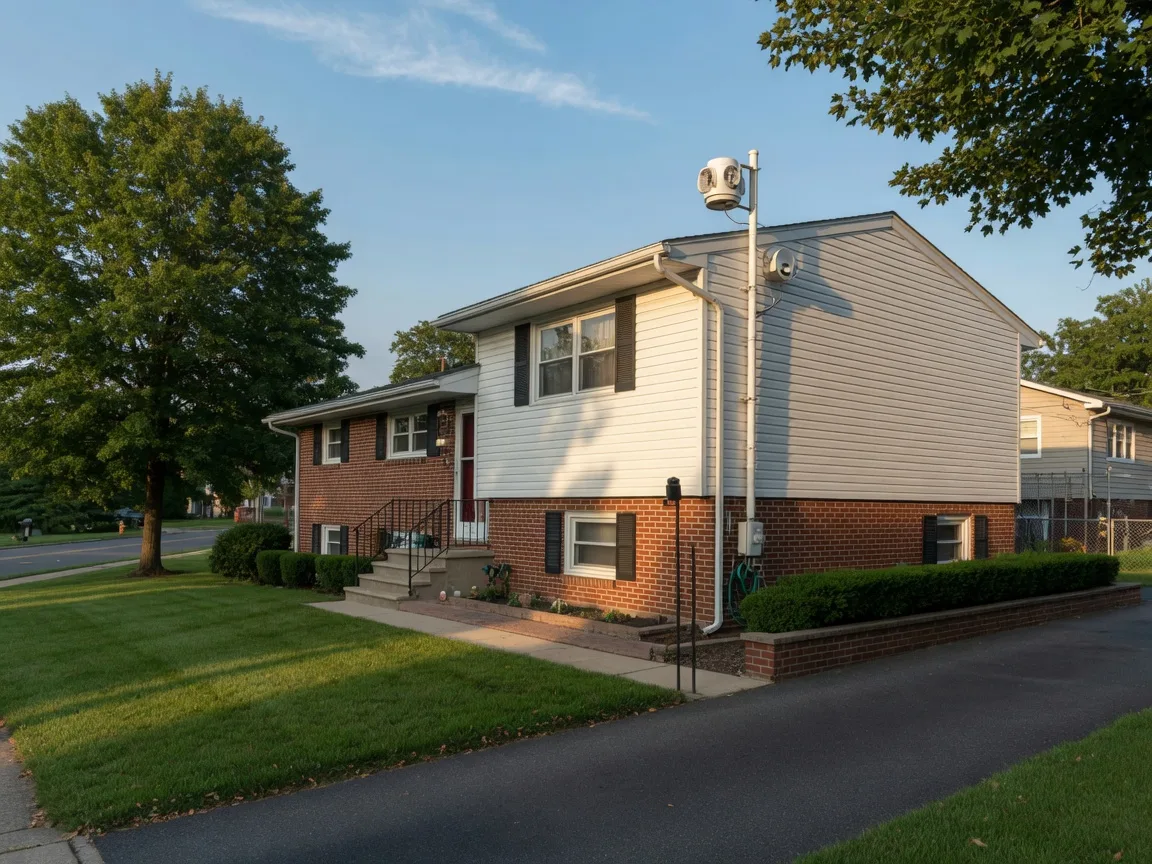
For most single-family homes, a professionally installed radon mitigation system runs roughly $1,000 to $2,000, with more complex jobs, multiple suction points or unusual foundations, on the higher side and sometimes reaching $2,000 to $3,500. The standard fix is sub-slab depressurization: a fan draws the soil gas from beneath the basement slab through a pipe that vents above the roofline, the white pipe you have almost certainly noticed climbing the side of a neighbor's house. Installation usually takes a day, the fan runs on modest electricity, and a post-mitigation test confirms the system is working.
A handful of NJDEP-certified mitigation companies serve the Cherry Hill area, and the state requires anyone doing mitigation work for hire to hold that certification, so the list of approved firms is short and verifiable. When you hire any home professional in the township, the vetting habits, license checks, and contract basics in the contractors guide apply the same way they would to a plumber or roofer.
What should buyers and sellers know about radon?
If you are buying in Cherry Hill, treat a radon test as a standard part of the home inspection, not an optional add-on. The real estate contract in New Jersey typically gives buyers an inspection window, and a radon test belongs inside it. If the reading comes back at or above 4 pCi/L, the fix is a known quantity with a known price, so buyers negotiate for the seller to install a system or for a credit toward one. A seller who already has a test on file, clean or not, makes the transaction smoother for everyone, because the question gets answered instead of debated.
Sellers should also know that a mitigation system already installed is rarely a negative at the negotiating table. Buyers read it as a home that is fixed and actively healthy, not as a stigma, especially once they learn how many Cherry Hill homes test elevated in the first place. When you are ready to make a move, the Cherry Hill real estate market guide covers current conditions, and any buyer or seller in town benefits from having a radon answer ready before the offers arrive.
What if you are planning a basement remodel?
Test before you build, not after. Finishing a basement, adding a bathroom below grade, or putting down new flooring is exactly the moment to run a radon test, because it is far easier to install a mitigation system before the drywall and flooring go in than to cut through them later. As part of any lower-level renovation, seal visible cracks in the slab and foundation walls with polyurethane caulk or hydraulic cement, replace the sump pit lid with a gasketed cover, and seal the gaps where pipes and wires pass through the concrete. If the test still comes back elevated, a sub-slab depressurization system can be installed through the finished slab, and a qualified NJDEP-certified company can usually route the vent pipe where it is least visible. A little planning at the remodel stage costs almost nothing. Tearing out new drywall to fix it later costs a lot.
How often should you retest?
Retest every couple of years as a baseline, and retest sooner after anything that changes your home's air flow: a finished basement, a major addition, a new heating or cooling system, or extensive foundation work. Homes with a mitigation system should be retested every two years to confirm the fan and the pipe are still doing their job. If you never tested in the first place, the strongest first step is the cheapest: a $30 kit, a sealed house for a week, and a lab result in your hand before heating season really gets going.
The test costs less than a tank of gas and takes one weekend of your time. Have questions about Cherry Hill? Contact Bob Millaway at 856.426.1522, and Bob will point you to the right NJDEP-certified testers, the right contractors, and the right next step for your home.
Keep Exploring Cherry Hill
More guides from Bob Millaway to help you love where you live.
Written by Bob Millaway, Epique Realty AI Certified Agent™
Your Cherry Hill community expert. Have questions about Cherry Hill, indoor air, or your home's systems? Contact Bob Millaway at 856.426.1522 or get in touch.